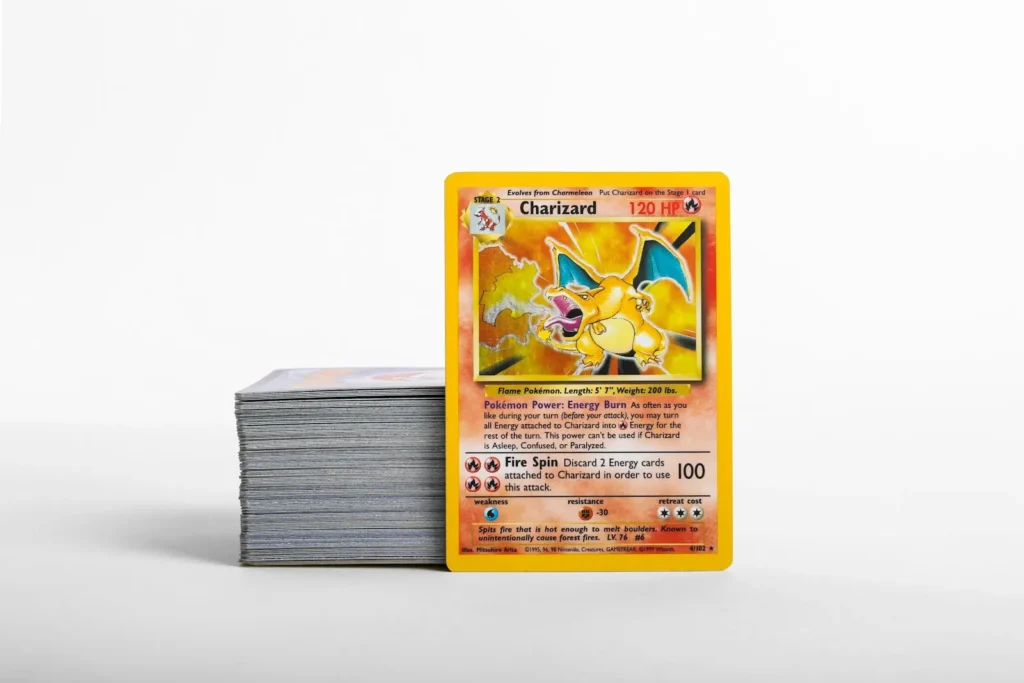
Real vs. Fake Chinese Pokémon Cards
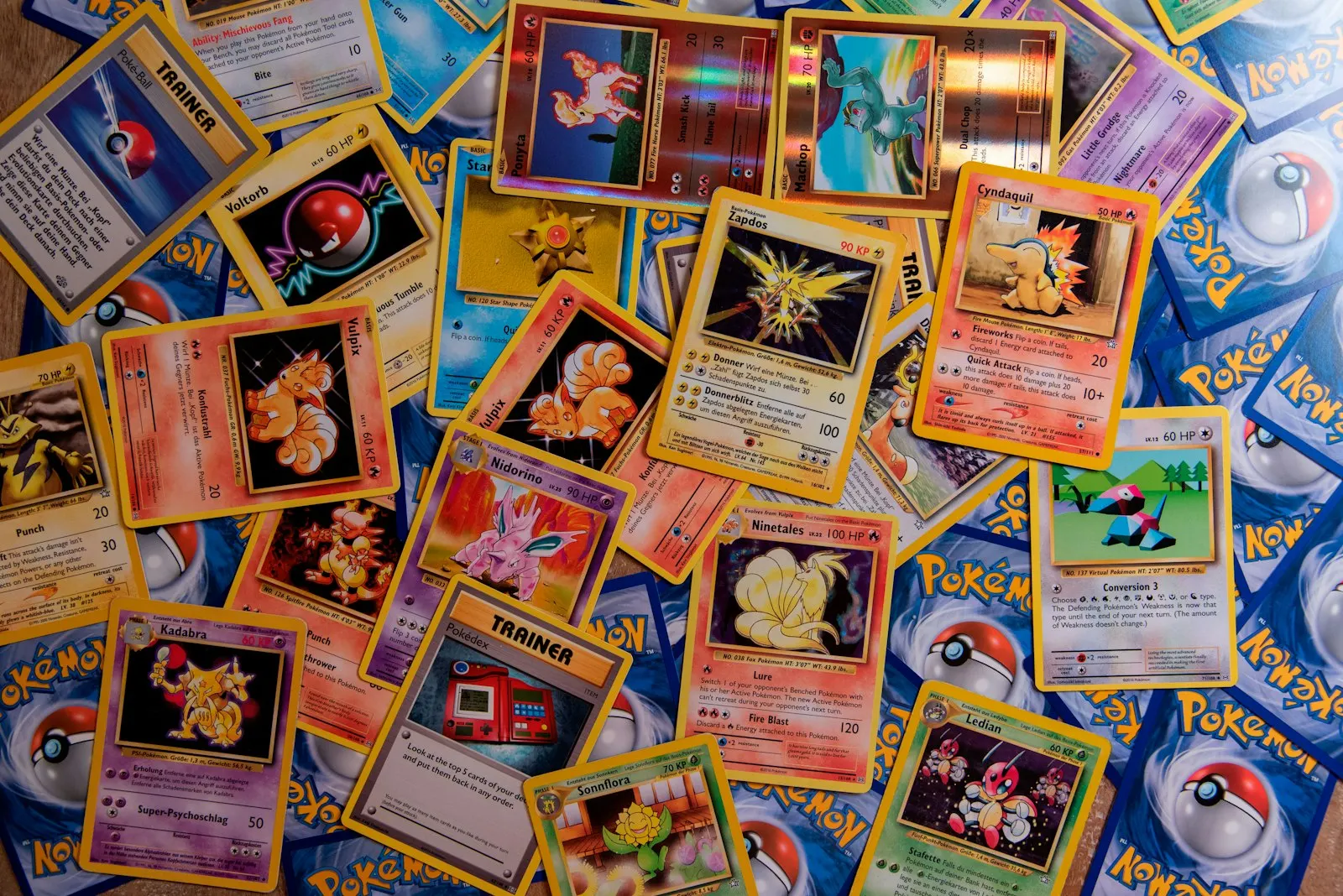
Image: Unsplash
If you are trying to tell real vs. fake Chinese Pokémon cards apart, the first mistake is treating “Chinese” and “fake” as the same thing. Retail Simplified and Traditional cards are real products, printed for those markets. Bootlegs with Chinese text on them exist too, and they fool people precisely because the language on the card looks unfamiliar to anyone who learned the hobby in English.
The second mistake is running English-card tests on a Chinese card and trusting the result. A genuine Simplified or Traditional card can “fail” a flashlight test that an English card would pass, because the card is built differently. Compare a suspect card with a known genuine card of the same language and era. An English card is the wrong reference.
The collector’s guide to Chinese Pokémon cards covers the two Chinese lines, including set history and packaging. The checks below are the ones that help when a card is already in your hands.
Real vs. fake Chinese Pokémon cards: how they are built
English Pokémon cards are printed in the United States and Europe. Japanese cards are printed in Japan, and modern Simplified and Traditional Chinese cards are made in Japan as well. Simplified Chinese booster boxes and shipping cartons are marked “MADE IN JAPAN,” and Traditional Chinese product sold in Taiwan lists Japan as its country of origin. The Pokémon Company says a card’s country of origin is always shown on the product wrapping, so check the packaging on anything still sealed.
That shared Japanese production is why Japanese, Simplified Chinese, and Traditional Chinese cards often feel like a family, and why English cards are the odd ones out. Collectors who handle both describe the Asian-language cards as thinner and glossier than English cards, with a different finish and edge.
The rule that follows from that is simple. Compare a Simplified Chinese card with a Simplified Chinese card, and a Traditional Chinese card with a Traditional Chinese card, from a similar era when you can. If the only card you have to hold it against is an English one, you do not have a fair test.
The light test and the rip test do not work the same way here
These are the two tests people reach for first, and they are the two most likely to fool you on a Chinese card.
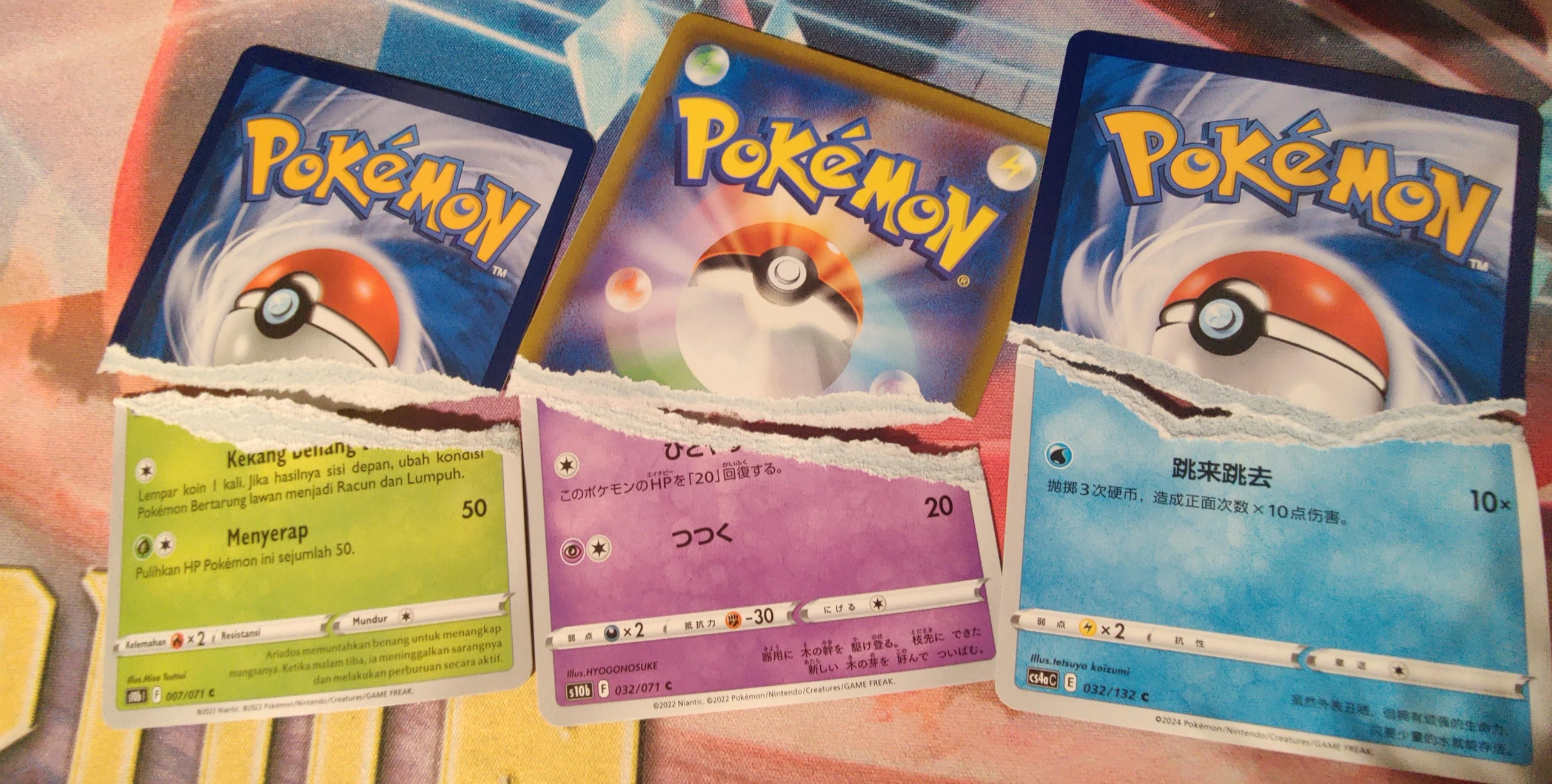
On English cards, a common check is to shine a phone flashlight through the card. A genuine English card has a dark core layer that blocks most of the light. Genuine Chinese and Japanese cards are built differently: they are thinner, the core is not the same dark layer, and light comes through. A genuine Chinese card that lets light through is normal. That glow tells you nothing about whether the card is fake.
The rip test has the same problem. On English cards, tearing a card often shows a black layer in the middle. Genuine Chinese and Japanese cards can show a blue core instead. People have destroyed a real Asian-language card because they were looking for black. Ripping also ruins the card either way, so it is a poor way to check something you still want to keep. If a card is already damaged, the core color can be useful information, but it is not a reason to tear a card that is still intact.
Know which line you are holding

Simplified Chinese is the mainland China line. Pokémon is written 宝可梦. That retail line has been on sale since October 2022. Traditional Chinese is the line for Taiwan, Hong Kong, and Macau. Pokémon is written 寶可夢. The current Traditional line has been on sale since October 2019.
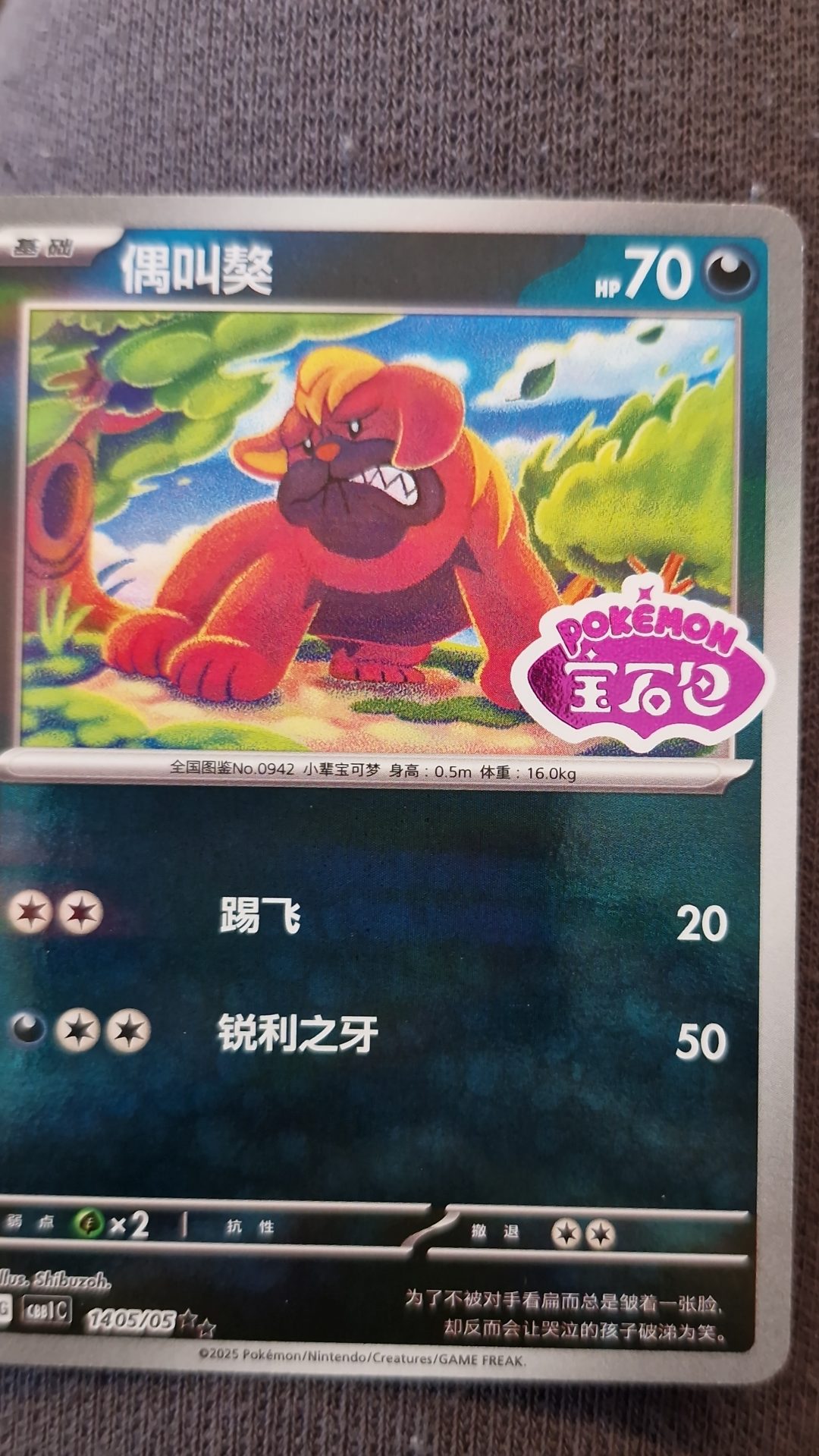
There was no Simplified Chinese retail line before 2022. A “vintage” Simplified card is not from that line. Retail cards also use the names 宝可梦 and 寶可夢. Older Chinese names for Pokémon never appeared on them, so a modern-looking card with an old name is a bootleg.
Set codes and the bottom-left corner
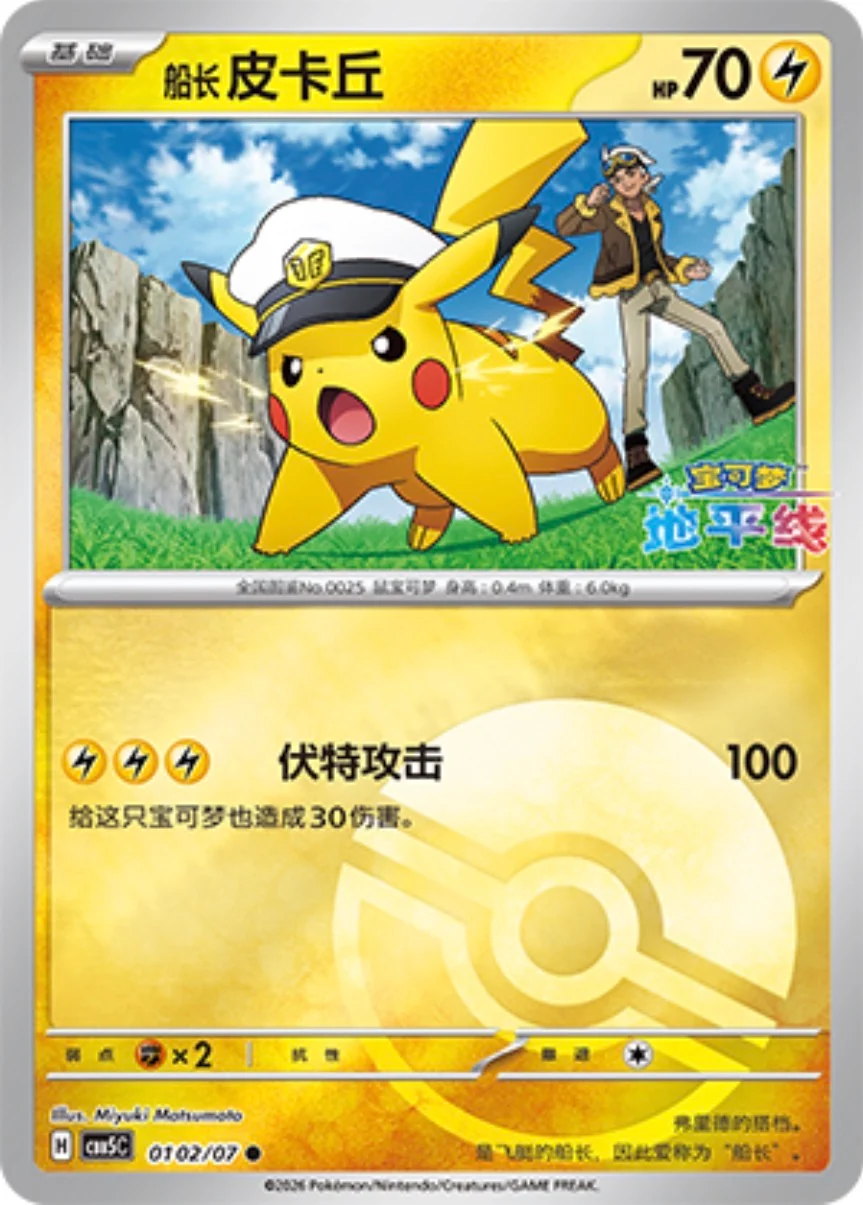
The small print in the bottom-left corner is one of the best places to catch a fake without reading Chinese.
- Simplified Chinese set codes end in C, such as CSV1C or CSV10C, and Gem Pack codes like CBB7C.
- Later Traditional Chinese cards that follow a Japanese set use that set’s code with an F after it, such as sv2a F, along with the Japanese collector number and rarity letters (C, U, R, AR, SAR, and so on). Earlier Traditional sets, from the 2019 relaunch, used their own codes, such as AC1a.
A “Traditional Chinese” card with an English-style set number, or a Simplified card whose code does not end in C, does not add up. Then look the card up. Traditional Chinese cards are listed in the card search on the Taiwan trainer site, asia.pokemon-card.com. Simplified products are listed on the Pokémon China site. If the name, number, rarity, HP, or attacks do not match, stop there.
The embossed logo on Simplified Chinese holos
This is the authenticity feature The Pokémon Company describes for Chinese cards. Pokémon China’s own site says every Simplified Chinese holo card has a small Pokémon logo pressed into the lower left, a design found only on genuine Simplified cards. Tilt the card under a light to see it.
- It is a holo feature. Collectors report that non-holo Simplified cards do not have it, so a plain common without it is not a red flag.
- Traditional Chinese cards do not have it. That is normal.
- It is not proof on its own. Collectors have reported fakes that copy it. A copied logo can look flat, printed on, or blobby instead of crisp.
Print quality, texture, and text
CGC, the grading company, published a useful example in March 2026: a fake Simplified Chinese Gem Pack Vol. 2 Umbreon. Next to the genuine card, the fake was missing the thick line of Umbreon’s closed eye and the shading on its toes and tail, so the art looked flat. The genuine foil threw off clear diagonal bars of light when tilted, and the fake’s foil was duller, with fewer bars. The fake was also missing the small security stamp in the bottom-left corner.
PSA notes that counterfeits often look blurry under magnification because they are made from scans, not the original print files. Look closely at the small print and the fine lines of the artwork. On fake Japanese cards, collectors point to fuzzy characters, ink bleed, and uneven stroke weight, and the same close look works on Chinese cards when you compare against a genuine card from the same line.
Expect real differences between languages. The Pokémon China site says Simplified commons, uncommons, and rares can come as “random holo” cards with a pattern unique to the Simplified line. A holo Simplified common is not wrong. It just does not match anything in English. On special art rares and art rares, genuine cards have a fine texture you can feel with a fingernail. Fakes are often flat and smooth. Check that against a genuine card from the same line, not against an English card.
You do not need to read Chinese to compare shapes. Pull up the published image of that exact card and check the characters, the line breaks in the attack text, and the HP and damage numbers. Collectors who check Japanese cards say the line work inside the energy symbols is another place cheap fakes drift. Compare the symbols on the card in your hand with the image of that same card.
Sealed packs and boxes
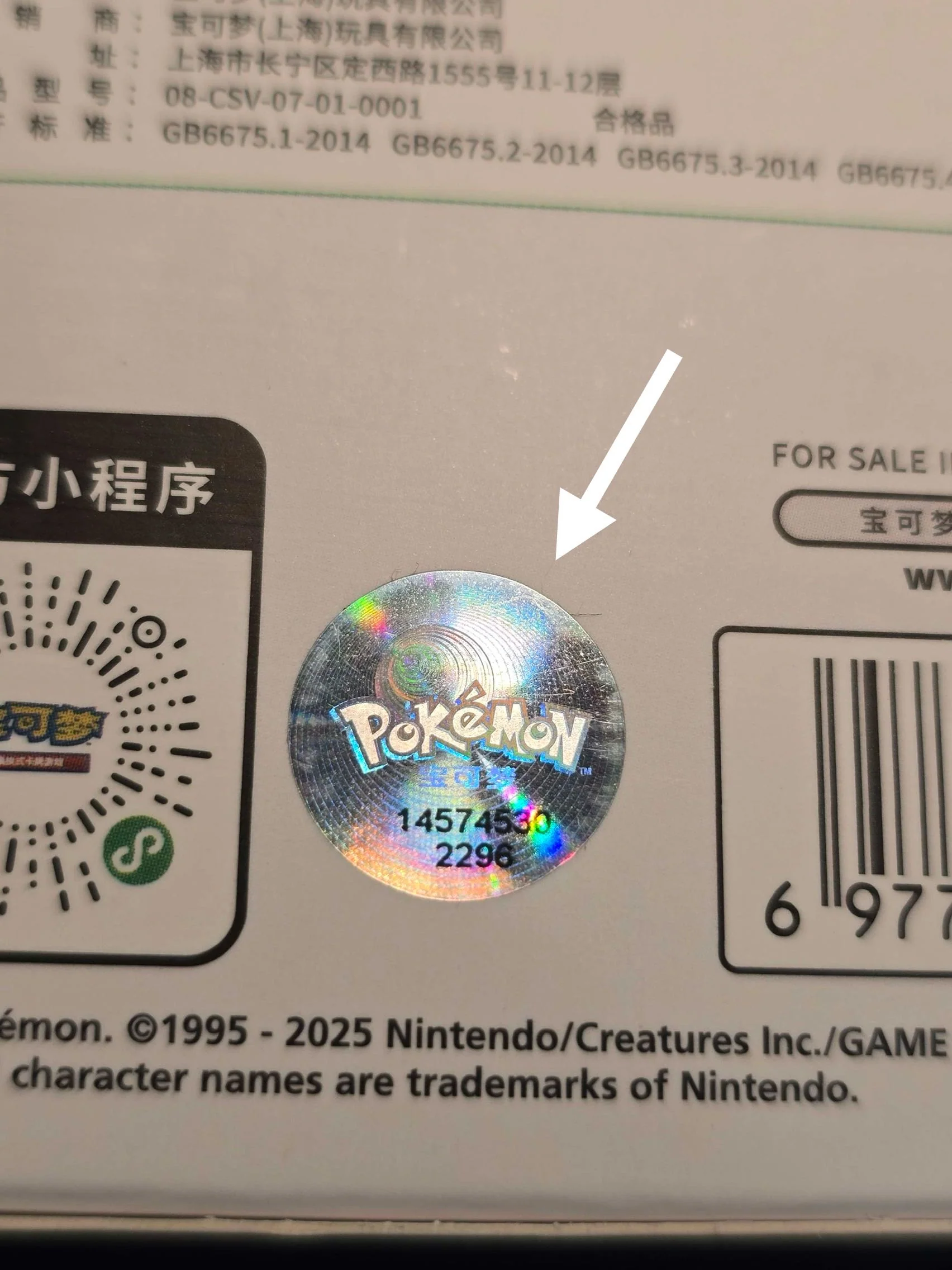
Sealed product gets faked, and genuine boxes get opened, searched, and resealed. Taiwanese media have reported resealed Traditional Chinese packs turning up at retail. Before you break the wrap, check the pack seals, the shrink wrap, and the codes.
- Factory crimps are machine-pressed, even, and smooth. Uneven heat marks, glue residue, or cut marks are warning signs.
- On shrink wrap, look for a second, overlapping seam, loose or cloudy film, or glue shine.
- On Simplified boxes, the set code should end in C and match the product.
- Some Simplified Gem Pack boxes come in shrink printed with Poké Balls, but not every genuine box has it, so treat it as one sign, not proof.
If you open an expensive box, film it in one continuous take from the wrap to the last pack. That record will not prove a box was genuine when you bought it, but it will show whether the seal looked intact when you started.
Price red flags and where fakes turn up
PSA’s fraud reporting has long warned that deals far below market value deserve suspicion, and that counterfeiters go after inexpensive cards, not just the expensive ones. Collectors give the same warning about Chinese boxes on bargain marketplaces: if the price is far out of line, the product probably is too.
- Listings that use the words “replica,” “proxy,” or “metal card.”
- Stock photos, front-only photos of an expensive card, or a seller who will not send more pictures.
- “Complete sets” of chase cards for a few dollars on discount shopping apps.
- Graded cards whose certification number you have not checked on the grader’s own website. Fake labels can reuse real numbers, so make sure the card, set, and grade all match.
The simplest protection is still buying from someone you can ask questions, with the card in front of you. You can hold it, tilt it, check the edge, and walk away if something feels off.

If you want to look at a Chinese card in person in Greeneville, Sleeves & Screens is at 110 W Depot St, Greeneville, TN 37743; we carry Pokémon in English, Japanese, and Chinese, and we can check and authenticate cards, but we do not grade them. Regular hours are Wednesday and Thursday 12 to 8 p.m., Friday and Saturday 2 to 10 p.m., and Sunday 2 to 8 p.m., closed Monday and Tuesday. Call (423) 831-7447, email hello@sleevesnscreens.com, or contact us, and for a wider picture of the shop see our card shop guide to Greeneville.
Frequently asked questions
Yes. Retail Simplified Chinese cards (宝可梦) and Traditional Chinese cards (寶可夢) are real products, printed for those markets. Bootlegs with Chinese text on them also exist, so the language on the card is not proof by itself.
Compare the card with a known genuine card of the same language and era, and check the set code in the bottom-left corner, the print quality, and, on Simplified holos, the embossed logo in the lower left. Look the card up in the Taiwan or Pokémon China card lists when you can. An English card is the wrong reference.
Not in the way people expect. Genuine English cards have a dark core that blocks most of a flashlight. Genuine Chinese and Japanese cards are thinner, with a different core, and light often comes through. That glow is normal and does not tell you the card is fake.
No. Ripping destroys the card, and the core color you were taught to look for on English cards can be different on a genuine Chinese or Japanese card. A blue core on an already-damaged Asian-language card is not, by itself, proof of a fake.
Look at the factory crimp, the shrink wrap, and the set code, which should end in C on Simplified boxes and match the product. Uneven heat marks, glue residue, a second wrap seam, or a price far below what that product usually sells for are reasons to pause. Taiwanese media have also reported resealed Traditional packs at retail.